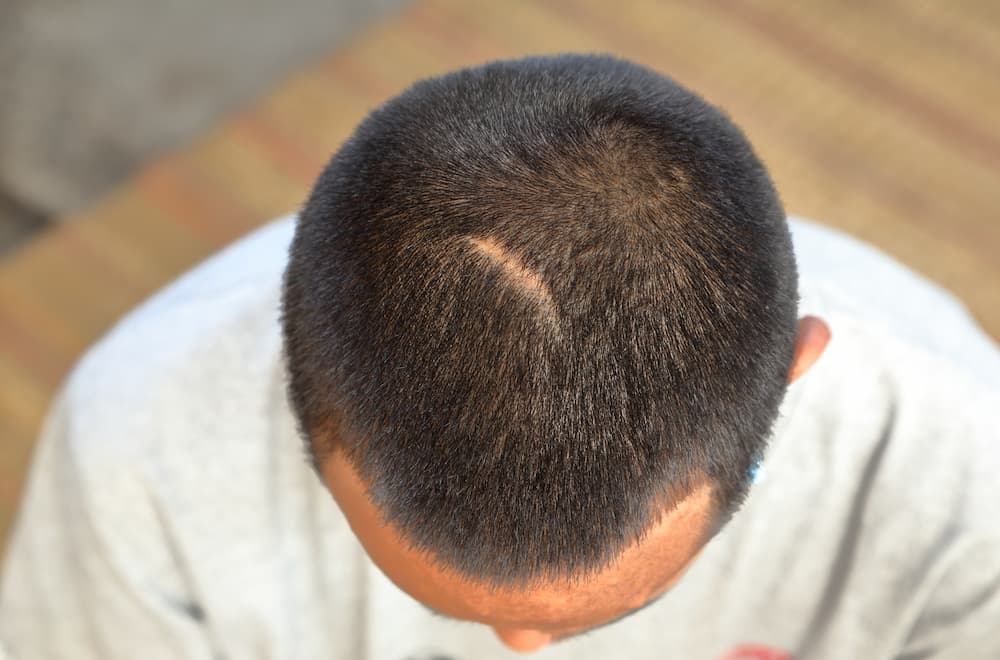
If you’re considering surgical hair restoration, it’s natural to have questions about scarring, especially when researching Follicular Unit Transplantation (FUT) procedures. One of the most common concerns patients ask about is the FUT hair transplant scar and whether it will be noticeable long-term. At Moleno Hair Restoration in Dallas, TX, we believe informed patients feel more confident in their treatment decisions. Understanding how FUT works, why scarring occurs, and how it can be minimized can help you decide if this approach is right for you.
While FUT does involve a small linear scar, advances in surgical techniques and proper aftercare have made scarring less noticeable. Let’s take a closer look at what you can expect.
Key Points:
- FUT hair transplants do leave a linear scar, but modern techniques make it less noticeable.
- A properly healed FUT scar can often be hidden by surrounding hair.
- Trichophytic closure helps hair grow through the scar for better camouflage.
- FUT remains an excellent option for patients needing higher graft counts.
- A personalized consultation helps determine the best approach for your goals.
How FUT Hair Transplant Surgery Works
FUT hair transplant surgery is a well-established technique that allows surgeons to transplant many grafts in a single session. During the procedure, a thin strip of scalp is carefully removed from the donor area, typically along the back of the head where hair is most resistant to thinning. This donor strip is then dissected into individual follicular units under high-powered magnification.
These grafts are implanted into thinning areas following the natural hair direction. The donor site is then closed with advanced suturing to promote clean healing and minimize tension.
Why FUT Can Leave a Linear Scar
The reason for an FUT hair transplant scar that’s linear is directly related to how donor hair is harvested. Removing a strip of scalp creates an incision that must be closed once the grafts are harvested. As the edges of the incision heal together, a scar naturally forms along that line.
This scarring is a normal response and does not indicate a complication or poor technique. The appearance of the scar depends on several factors, including the surgeon’s experience, scalp elasticity, skin type, and how well post-operative instructions are followed. At Moleno Hair Restoration in Dallas, TX, careful surgical planning and precision closure techniques help ensure the scar remains as discreet as possible.
Scar Visibility and Healing Over Time
Immediately following surgery, the FUT scar may appear red or slightly raised. This is a normal part of the healing process. Over the following weeks and months, the scar gradually softens and fades as collagen remodeling occurs within the skin.
Most patients find that their FUT hair transplant scar becomes significantly less noticeable within 6-12 months. In many cases, the scar fades into a fine line that blends naturally with the surrounding scalp. Proper aftercare, including avoiding excess tension, protecting the area from sun exposure, and following wound care instructions, plays an important role in achieving optimal healing.
Techniques To Minimize FUT Scarring
Modern FUT procedures place a strong emphasis on minimizing scarring. One of the most effective methods is trichophytic closure, a specialized suturing technique that allows hair to grow directly through the scar. This helps break up the appearance of the line and allows the scar to blend more naturally with the surrounding hair.
Additional factors that help reduce scarring include limiting tension during closure, maintaining good scalp health, and closely following post-operative care guidelines. For patients concerned about scar appearance, additional treatments such as medical-grade scar therapies or scalp micropigmentation may also be discussed once healing is complete.
FUT vs. FUE — Differences in Scarring
When comparing FUT and FUE, scarring is one of the most commonly discussed differences. An FUT hair transplant scar is a single linear scar, while Follicular Unit Extraction (FUE) involves removing individual follicles one by one, resulting in tiny dot-like scars spread throughout the donor area.
Neither technique is completely scar-free. Instead, they produce different scar patterns. FUT hair transplant scarring is often easier to conceal for patients who wear their hair slightly longer in the back, while FUE may appeal to those who prefer very short hairstyles. However, FUT is often better suited for patients who require a higher number of grafts or have more advanced hair loss.
Is FUT Still a Good Option Despite Scarring?
For many patients, FUT remains an excellent hair restoration option. It allows for efficient graft harvesting, strong long-term results, and effective coverage for larger areas of hair loss. When performed by an experienced surgeon, the resulting FUT hair transplant scar is often minimal and easily concealed.
Patients who prioritize density, donor hair preservation, or advanced restoration frequently choose FUT. A personalized consultation helps determine if FUT is the best option based on your hair characteristics, goals, and lifestyle.
Restore Your Confidence With an FUT Hair Transplant at Moleno Hair Restoration
If concerns about scarring have held you back from hair restoration, understanding the realities of an FUT hair transplant scar can provide valuable peace of mind. With modern surgical techniques and personalized treatment planning, FUT hair transplants continue to deliver authentic, long-lasting results for many patients seeking noticeable improvement and restored confidence.
Schedule a consultation at Moleno Hair Restoration in Dallas, TX. You’ll discover if FUT is the right solution for your hair restoration goals and how to minimize scarring for maximum results.
Frequently Asked Questions
Does every FUT hair transplant leave a scar?
Yes. FUT involves removing a strip of scalp, so a linear scar is expected, though it is typically thin and well-concealed.
How noticeable is an FUT scar after healing?
For most patients, the scar fades significantly over time and is difficult to notice once fully healed.
Can an FUT scar be hidden by surrounding hair?
Yes. The scar can usually be concealed by surrounding hair, even at moderate hair lengths.
Are there treatments available to reduce FUT scars?
Yes. Options may include laser therapy, medical-grade scar treatments, or scalp micropigmentation.
Is scarring less common with FUE compared to FUT?
FUE creates many small dot scars instead of one linear scar. Both methods involve scarring, but in different patterns.